

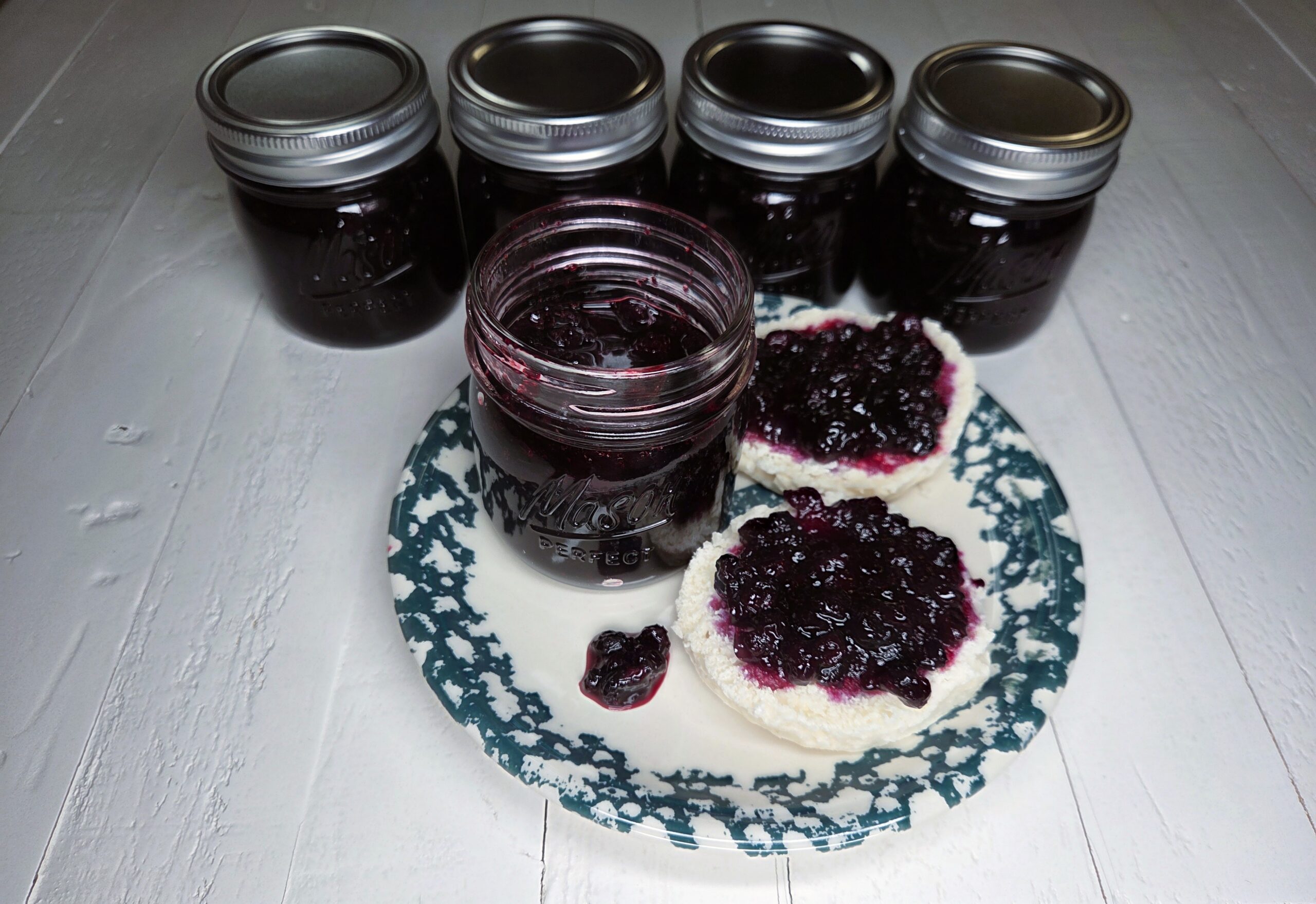
-
Prep Time30 minutes
-
Cook Time30 minutes plus canning time
-
Serv SizeYields 5 half pint
Huckleberry jam is delightfully sweet and tart, making it a perfect topping for biscuits, toast, ice cream, or even a flavorful addition to iced tea or oatmeal.
Ingredients
Directions
This is a step-by-step water bath canning tutorial for 5 half-pints of huckleberry jam.
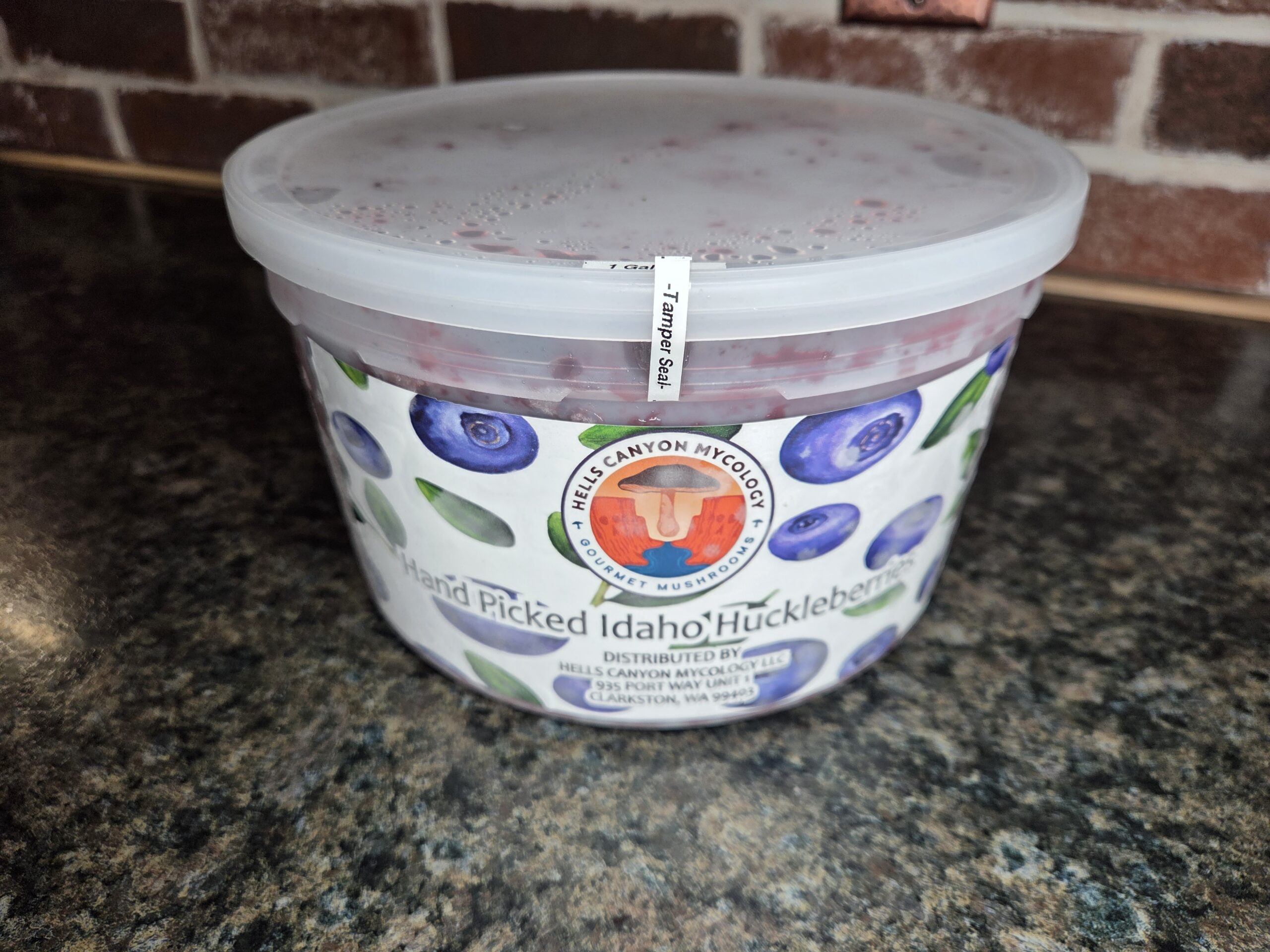
Huckleberries are small, round berries native to North America, especially common in the Pacific Northwest and mountainous areas like Montana and Idaho. They belong to the Ericaceae family, closely related to blueberries. Their colors range from red to blue to black, depending on the species. Huckleberries resemble blueberries but are often darker in color. Their flavor varies—red ones are tart, while blue and black ones are sweeter, offering a more intense, wild taste compared to blueberries. They are popular in pies, jams, syrups, teas, and candies but are not commercially farmed, making them mostly foraged or sold locally. Grizzly bears love them, as huckleberries can make up a third of their diet during peak season. I was lucky to secure a spot on a six-month waiting list at my local farmers market to get a gallon of frozen ones.
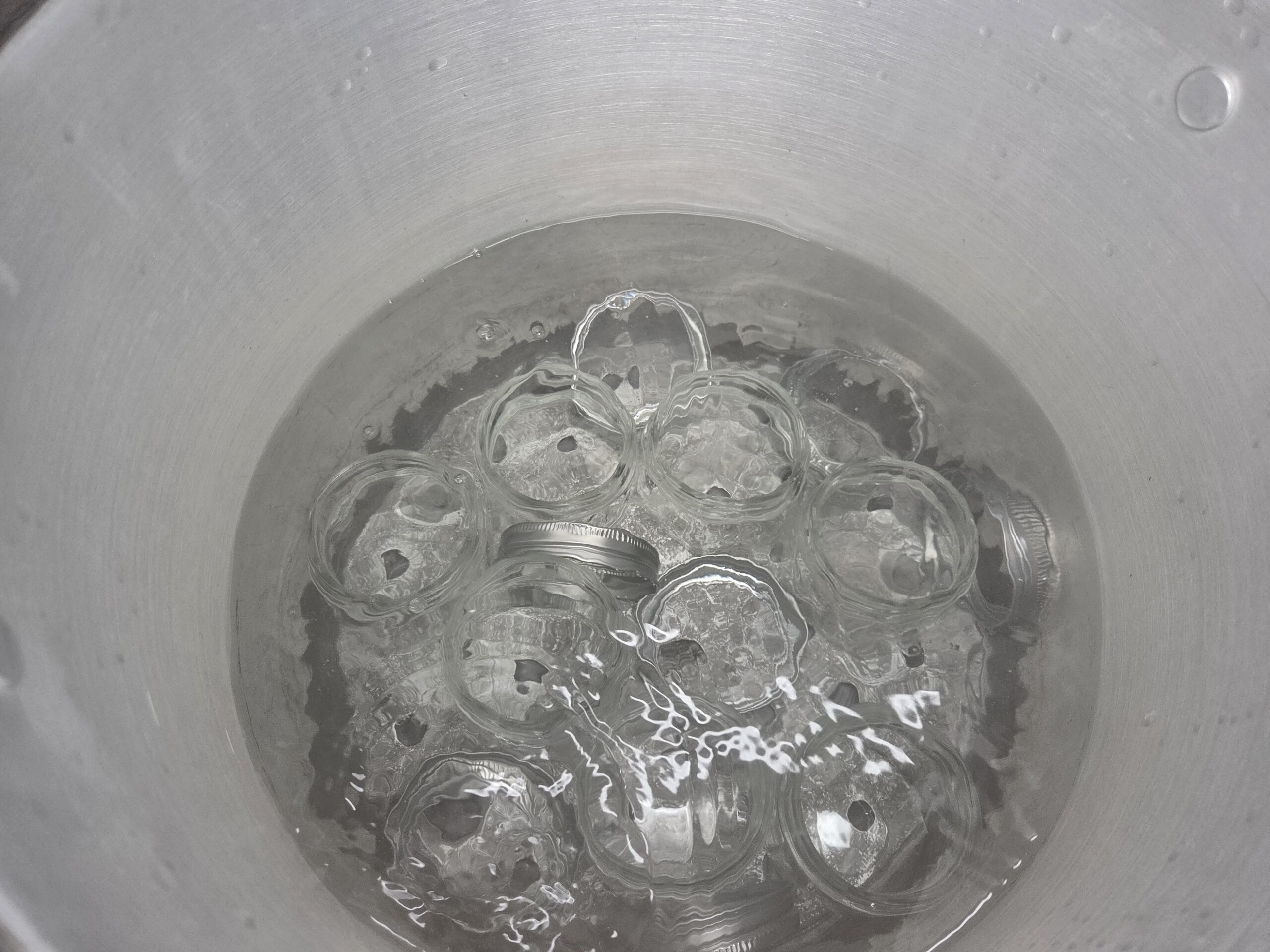
Wash jars, bands, and lids in warm, soapy water. Fill the canner with enough water to cover the jars while they are standing up. Boil jars and bands for at least 10 minutes before filling them with jam. DO NOT boil lids, as this will compromise their sealing ability.
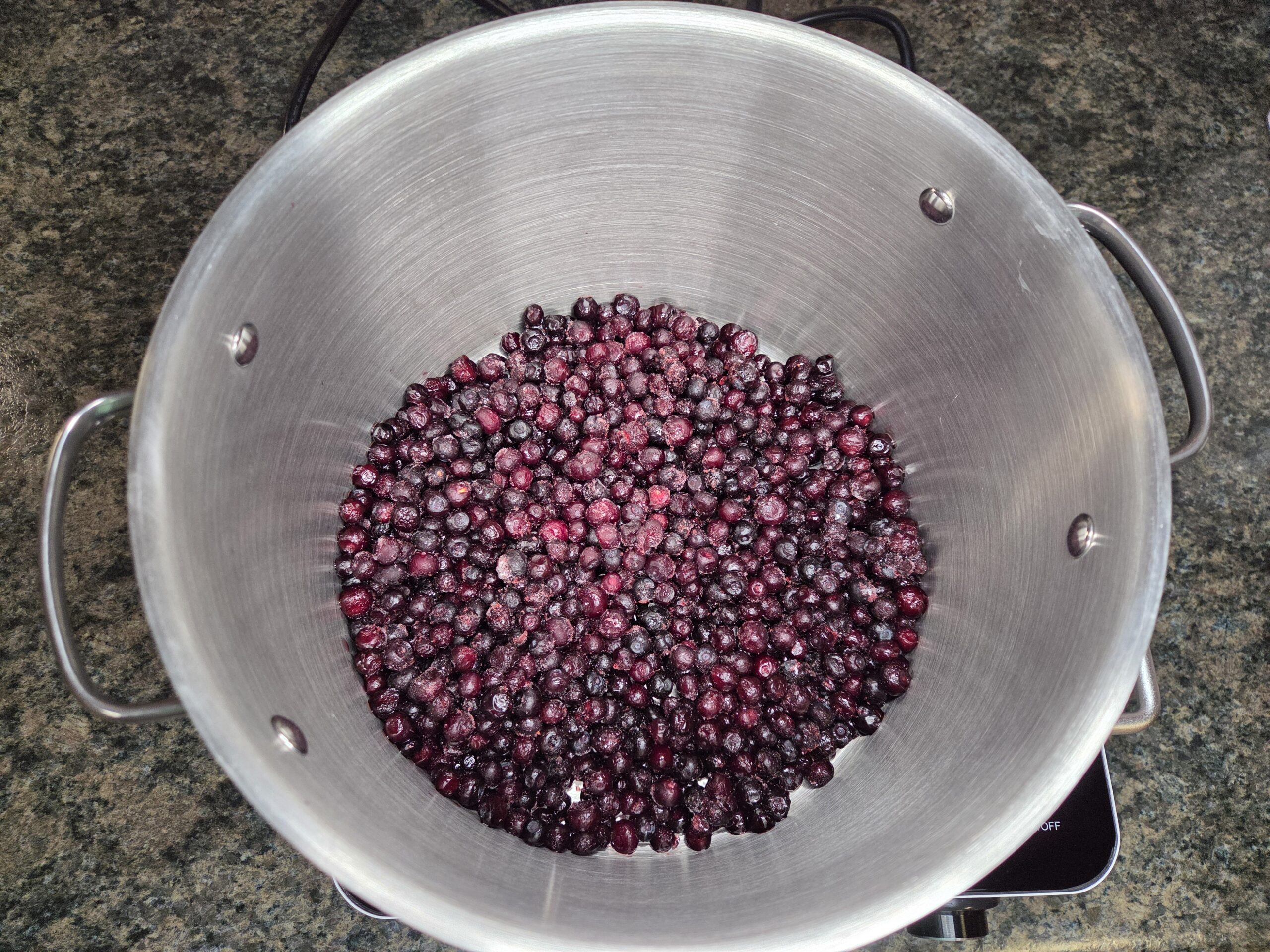
When using fresh wild berries, inspect them carefully, wash them thoroughly, and remove any stems or spoiled ones. If you’re using frozen berries, you can use them straight from the freezer; just keep in mind it might take a few extra minutes. Place the berries in a large, stainless-steel, heavy-bottomed pot, as aluminum can leave an unpleasant metallic taste. Heat the pot on medium low until berries are thawed then increase too medium.
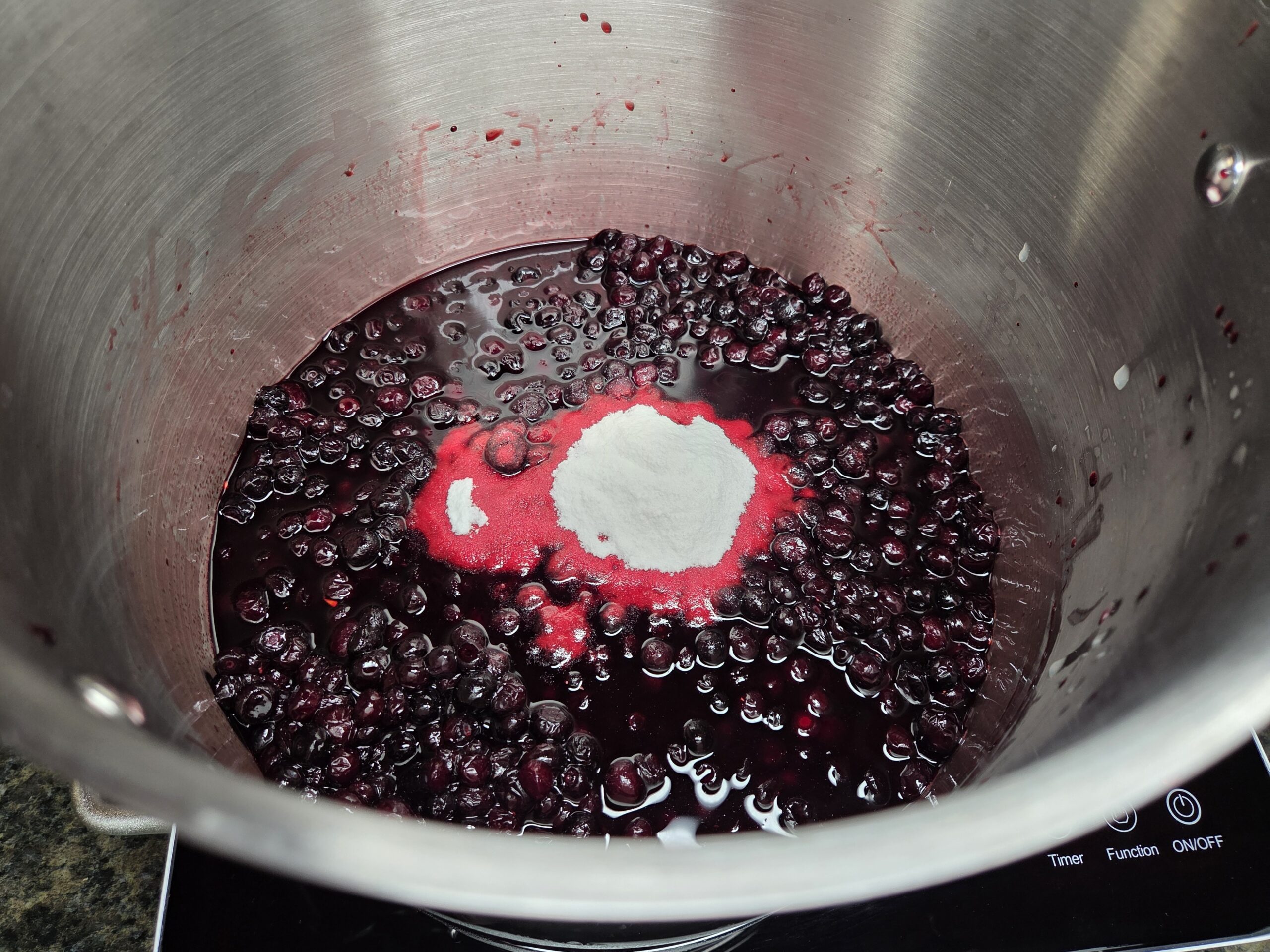
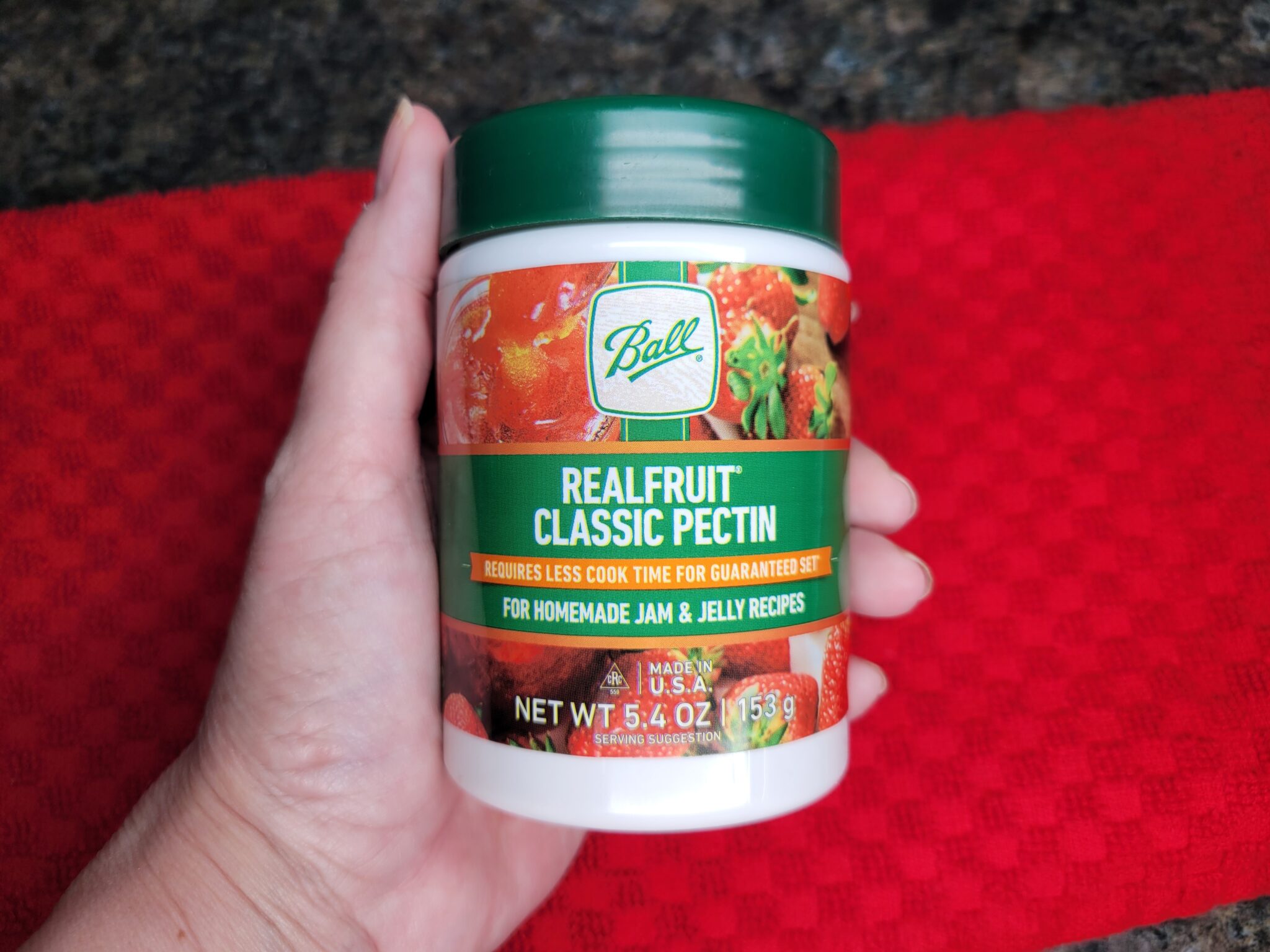
Once the berries reach a boil, add 3 tablespoons of lemon juice and 1/4 cup of pectin powder, stirring until fully dissolved. I prefer using pectin for thicker jam, but if you like a thinner consistency, you can reduce or skip it. Keep in mind that huckleberries are moderate to low in natural pectin, so they may not reliably set into a firm jam without some added pectin. Pectin is a soluble fiber found in fruits and vegetables like apples and citrus peels, is commonly used for its thickening properties in jams and jellies. Bring the jam to a boil again, ensuring the pectin is fully dissolved before adding sugar, as improper mixing can prevent the jam from setting.
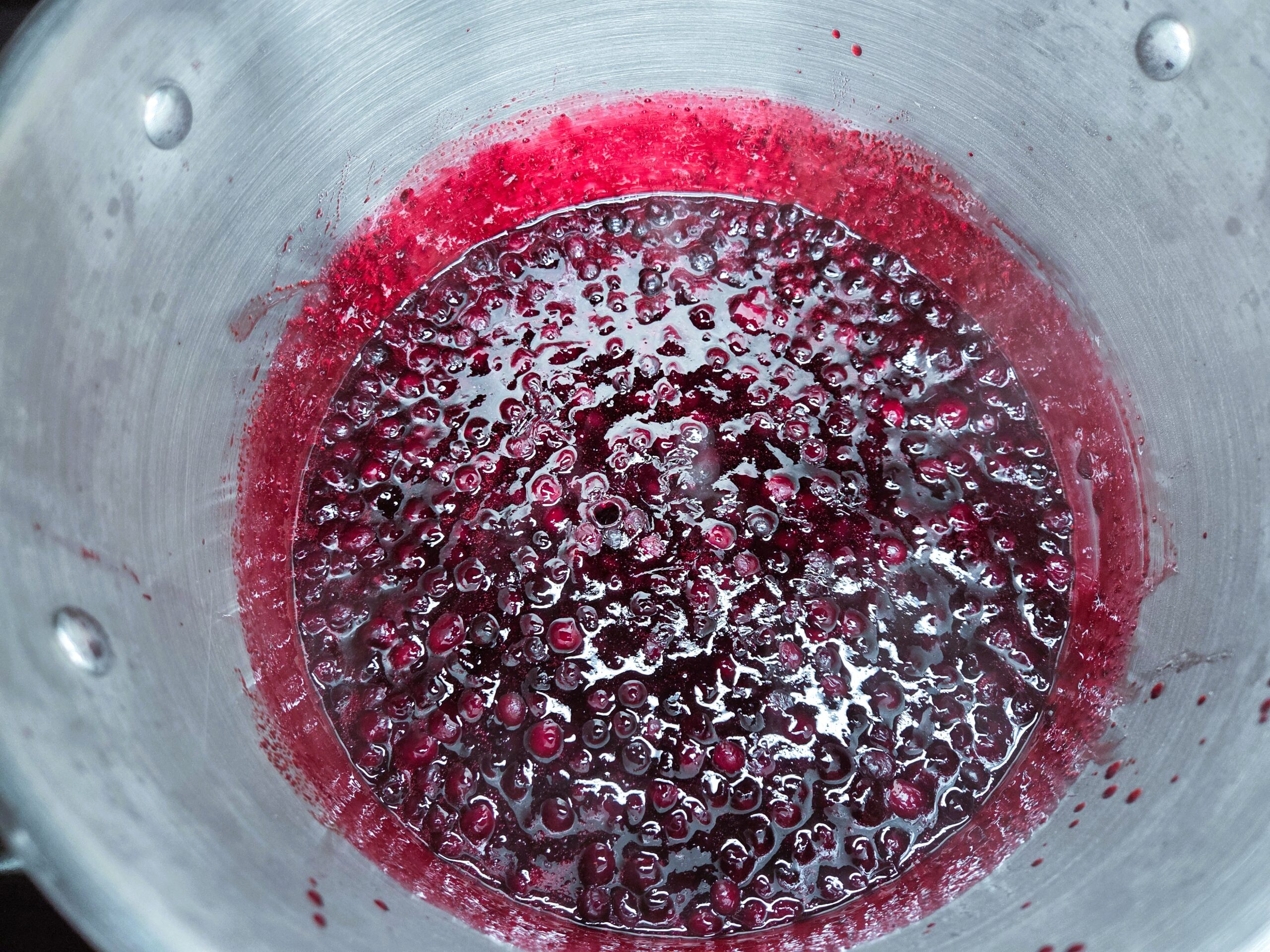
While the jam is boiling, add 3 cups of sugar and stir constantly to prevent the berries from burning. I prefer to keep my huckleberries whole in the jam, but you can choose to leave them whole, mash half of them, or mash all of them, depending on your preferred texture. Keep heating the jam on high, stirring continuously, until it reaches a full rolling boil and the sugar has dissolved. Let it boil for 1-2 minutes, then lower the heat to a simmer. Simmer the jam for 10 minutes, stirring frequently.
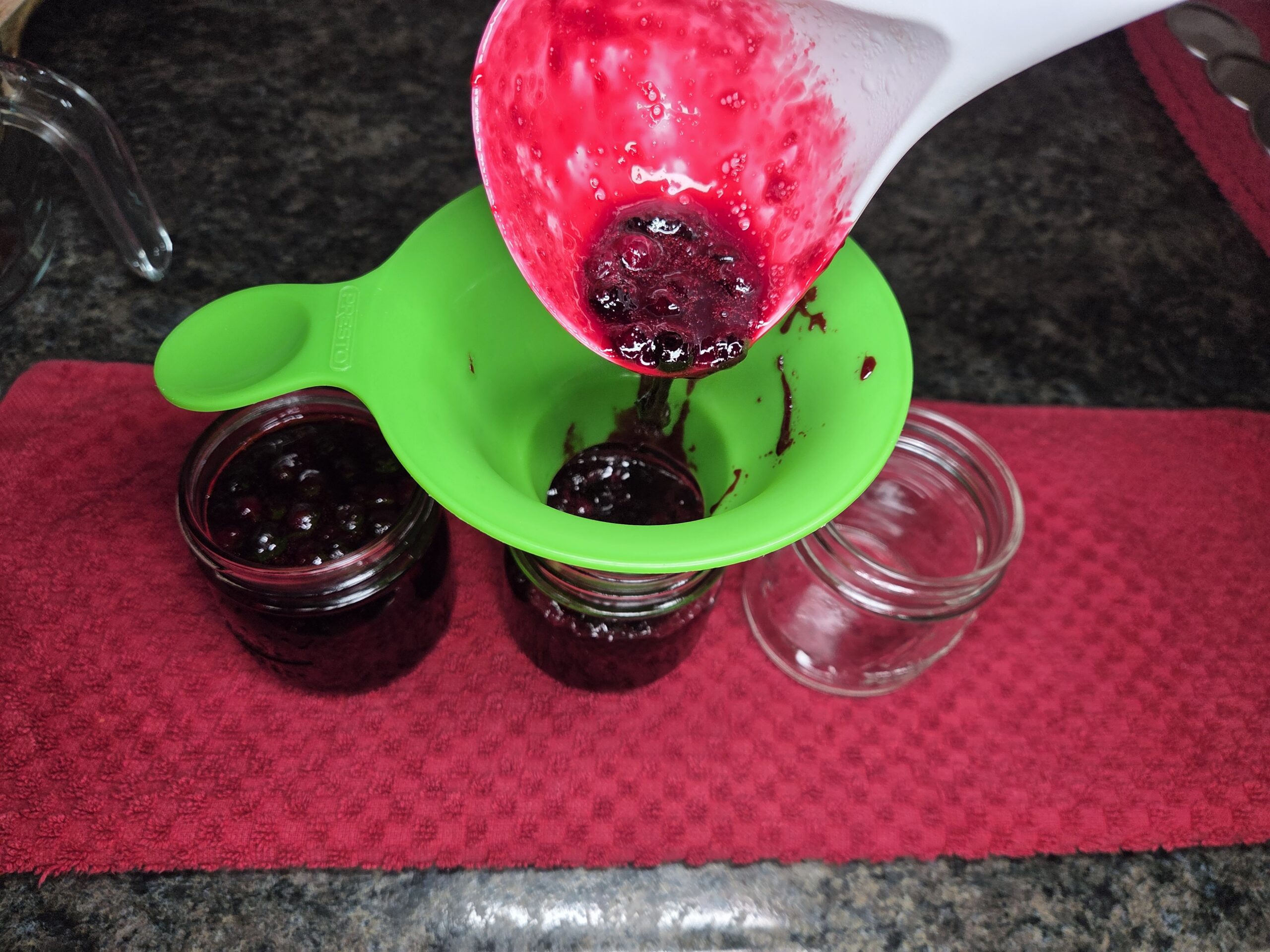
Remove hot jars from canner and using a funnel pour hot jam into hot jars leaving 1/4-inch headspace.
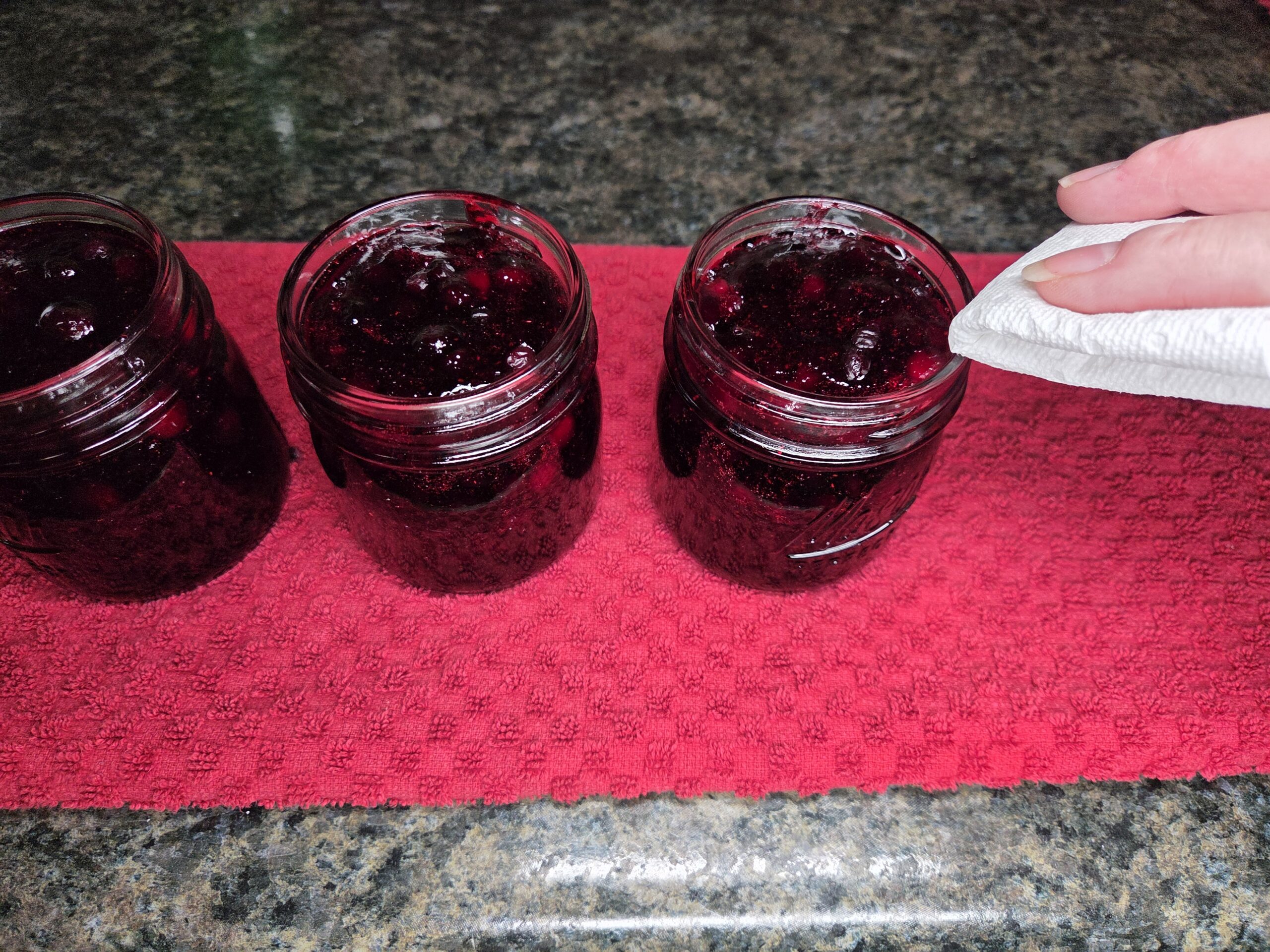
Wipe the rim of the jars with a clean paper towel or cloth, removing anything that might prevent the jars from sealing. Place lids and bands on jars and finger tighten. When placing jars into the water bath canner, avoid tilting them, as this can disrupt their seal before the canning process even starts, potentially causing spillage on the jar rims.
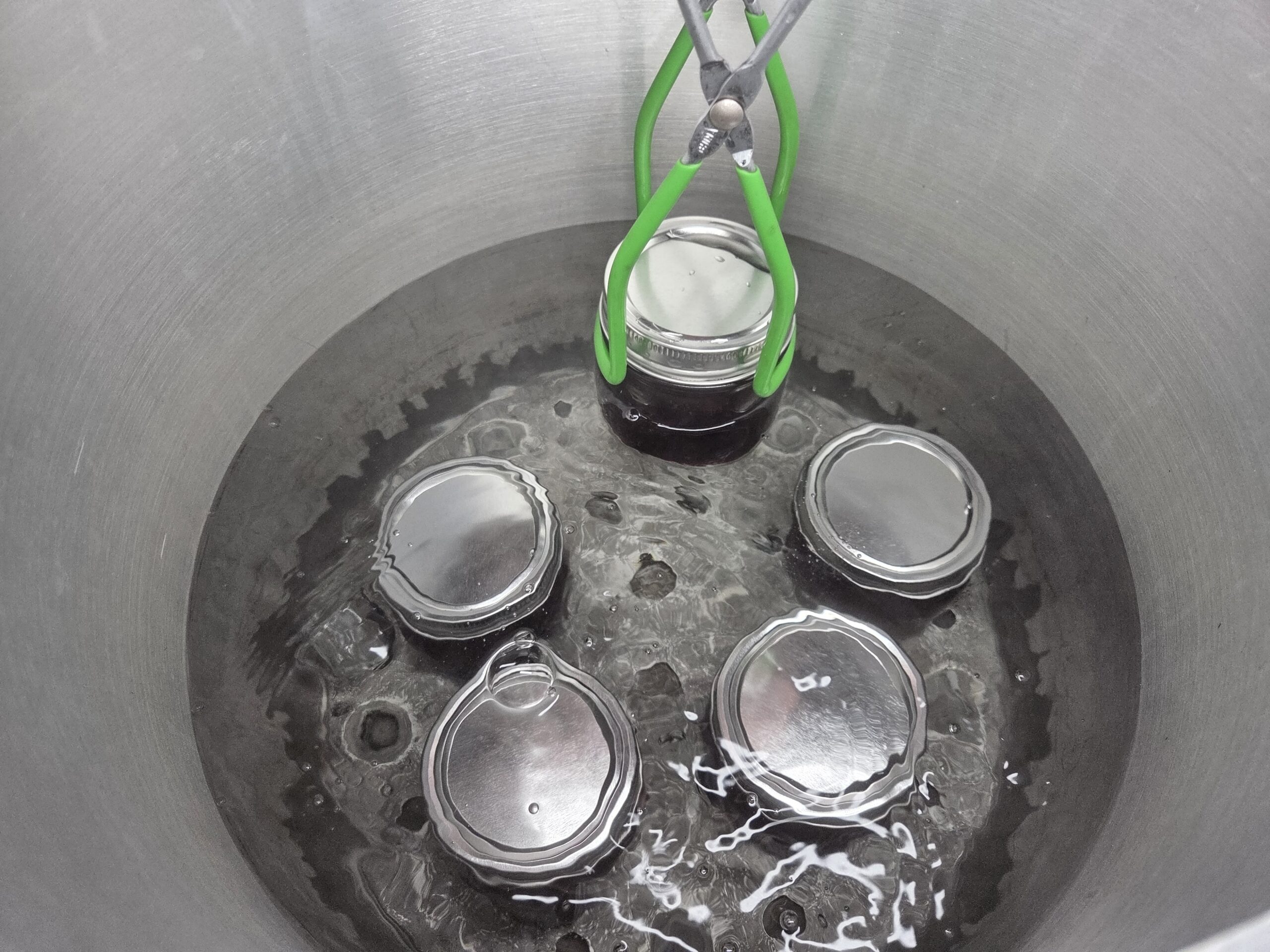
Carefully lower jars into the boiling water bath canner spacing them slightly from one another and from the canner walls. Water should be covering the tops of the jars by 1-2 inches. Place the lid on the canner. This is important, don't start counting your canning time until water is fully boiling and up to temperature. The following information is good for pints and half pint jars. For elevation of 0-1,000 feet your processing time is 5 minutes. For elevations of 1,001-6,000 feet your processing time is 10 minutes. For elevations 6,000 feet and above your processing time is 15 minutes. Once your time is up, turn off the heat and remove the canner from the heat source if possible. Remove lid and allow the jars to sit undisturbed in the water for 5 minutes. After 5 minutes, carefully remove jars from the water bath and place on a kitchen towel lined countertop. Some jars can take hours to seal however most will seal within 30 minutes from being removed from the canner and some may even seal during the water bath canning process. Leave the jars undisturbed for at least 12 hours. Make sure that all the jars sealed by inspecting the tops as they should be sucked in. If any jars don't seal, refrigerate them. Write the contents and date on the sealed jars and store in a cool dry place for up to 18 months.
Enjoy!
Conclusion
Kitchen Tools :Need some tools or ingredients to make this recipe? Use my Amazon Affiliate links to shop. I will make a small commission and it doesn't cost you any extra. Thank you for visiting.
Ball RealFruitTM Classic Pectin Presto 23-qt Induction Compatible Pressure Canner Amazon Basics Stainless Steel Stock Pot, 8 qt Electric Stove Top, 1800W Single Burner Mason Jars, 8 OZ, 12 Pack with Lids and Bands, Glass Canning Jars
Leave a Review